
India's current account slipped into a deficit of $9.6 billion or 1.3 per cent of GDP in the September quarter, the Reserve Bank said on Friday. The current account, which records the value of exports and imports of both goods and services along with international transfers of capital, was in a surplus mode both in the quarter-ago and year-ago periods. India's current account surplus had stood at $6.6 billion or 0.9 per cent of GDP in the April-June 2021 quarter, while in the year-ago period (Q2FY22), the surplus had stood at $15.3 billion or 2.4 per cent of the GDP, the data said.
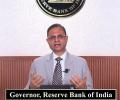
'India has the potential to grow at more than 7%, with the monetary policy providing a supportive hand.'
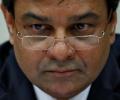
Patel, 55, who took over as the 24th Governor of the central bank on September 5, 2016, had the shortest tenure since 1992.

Suggesting steps to boost the Indian economy, the IMF chief further said the government should focus on fiscal consolidation.

It is projected to cross the $3 trillion mark in 2019

The downgraded World Bank forecast follows a similar move by the International Monetary Fund, which cut its growth forecasts two months ago
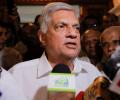
China will not be allowed to use the southern port of Hambantota for military purposes, Sri Lankan President Ranil Wickremesinghe has said, apparently attempting to allay fears in India and the United States about China's increasing maritime presence in the strategic Indo-Pacific region.

India has called for implementation of the automatic exchange of tax info.

Finance Minister Nirmala Sitharaman on Tuesday met IMF managing director Kristalina Georgieva and discussed a range of issues, including impact of geopolitical situation on global growth.

The biggest question looming over the summit is whether there will be a joint leaders' declaration in view of the sharp differences between the West and the Russia-China combine on the text to describe the Ukraine conflict in the document.

IMF MD Christine Lagarde hailed the government's latest Budget.

What some of our leaders were up to on Tuesday, November 15.
Rise in reserves was predominantly on account of increase in FCAs

The reserves had jumped $2.03 billion to $277.38 billion in the previous week.

One could argue that India is not troubled in the same way as China is by a declining population and structural problems in real estate/construction and finance. But India has serious trade and fiscal imbalances, and excessive dependence on capital expenditure by the government, points out T N Ninan.

Indian-American business leader Ajay Banga is poised to become the next President of the World Bank after the nomination period closed and no country proposed an alternate candidate for the prestigious post. In February, President Joe Biden announced that the US would be nominating Banga to lead the World Bank because he is "well equipped" to lead the global institution at "this critical moment in history." The World Bank on Wednesday closed a month-long window for nominations for its next president, with no alternatives announced to 63-year-old Banga.

International Monetary Fund Chief Economist Gita Gopinath tells Indivjal Dhasmana high-frequency indicators for the third quarter of 2021 indicate momentum in economic recovery in India.

India's gold reserves were also up by $297.7 million to $19.33 billion
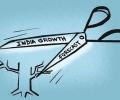
The biggest risk to India's growth outlook is an escalation of geopolitical tensions, especially if these tensions spread to the Asian region, RBI Monetary Policy Committee (MPC) member Jayanth R Varma said on Wednesday. Varma, in an interview to PTI, said that inflation and inflationary expectations appear to be moderating and high inflation will certainly not become the 'norm' in the country. He is cautiously optimistic about the Indian economy as after the pandemic abated, consumption demand has begun to recover though the recovery is uneven across sectors and industries.
President Ranil Wickremesinghe on Wednesday thanked India and Prime Minister Narendra Modi for giving Sri Lanka 'a breath of life' by providing timely economic assistance to his country as it faced the worst economic crisis in decades.

The reserves nearing $ 428 billion can take care of imports for almost 10 months, according to market experts.

Foreign exchange reserves have hit a fresh high.

The next annual budget of India will have to be very carefully structured to sustain the country's growth momentum, Union Finance Minister Nirmala Sitharaman said on Tuesday, noting that it will also address inflation concerns. Visiting Washington DC to attend the annual meeting of the International Monetary Fund and the World Bank, the finance minister was responding to a question on the next year's Budget at a fire-side chat with eminent economist Eshwar Prasad at the prestigious Brookings Institute. "Specifics (of the next Budget) may be difficult at this stage because it's a bit too early. "But broadly, the growth priorities will be kept absolutely on the top. "Even as I speak about the concerns that inflation brings before me. So, inflation concerns will have to be addressed. "But then how would you manage growth would be the natural question," Sitharaman said.

'We don't have to go abroad for anything.' 'Anyone who thinks we have a lot to learn from the US needs to have his head examined.' 'We are in a new era.'
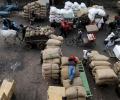
The economy may grow by around 7 per cent this financial year as estimated by the Monetary Policy Committee (MPC) of the Reserve Bank of India (RBI), say economists with various organisations. The first advance estimates for 2023-24 will be released on Friday by the National Statistical Organisation (NSO), an exercise done for calculating ratios such as the fiscal deficit. The interim Budget will be presented on February 1.

The country's foreign exchange reserves crossed the $600 billion mark for the first time after increasing by $6.842 billion in the week ended June 4, RBI data showed on Friday. The reserves surged to a record $605.008 billion in the reporting week, helped by a rise in foreign currency assets (FCA), a major component of the overall reserves, as per weekly data by the Reserve Bank of India (RBI). In the previous week ended May 28, 2021, the reserves had swelled by $5.271 billion to $598.165 billion.

India will encourage greater investments in Sri Lanka's economy, especially in areas of energy, tourism and infrastructure, External Affairs Minister S Jaishankar said on Friday, as he expressed India's solidarity with the debt-ridden Island nation during its "difficult moments".

India will surpass China as the world's fastest growing economy in the next 2-3 years, says RIL chairman Mukesh Ambani.

Foreign exchange reserves jumped $1.17 billion to touch a new record high of $355.46 billion.

Gold reserves declined by $346.2 million.

Reserve Bank of India (RBI) governor Raghuram Rajan says global markets are at risk of a "crash" should investors start bailing out of risky assets created by the loose monetary policies of developed economies.

"Now is the time for countries with room in their budgets to deploy -- or get ready to deploy -- fiscal firepower. In fact, low interest rates may give some policymakers additional money to spend," new IMF chief Kristalina Georgieva said.

The IMF lowered India's economic growth estimate for the current fiscal to 4.8 per cent and listed the country's much lower-than-expected GDP numbers as the single biggest drag on its global growth forecast for two years.

Female labour force participation in India is lower than many other EM economies.
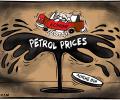
Amid news of a fuel shortage in some parts of the country and wider unrest over fuel issues in the neighbourhood, an analysis of the data from international tracker globalpetrolprices.com shows that the per litre price of petrol is higher in India than in seven out of its nine neighbours.
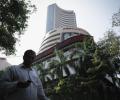
The NSE Nifty closed lower by 32.15 points, or 0.32 per cent, at 9,984.80.
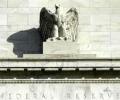
Strong dollar will impact financial system in India.
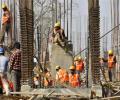
"We see the Indian economy rebounding from our projected 6.1 per cent growth this fiscal year to something like 7 per cent in the next fiscal year (2020). We see the factors that will support growth, including monetary policy stimulus, working their way through the pipeline," Jonathan Ostry, Deputy Director, Asia Pacific Department at the IMF, told reporters.

The minister further cited that the IMF's global growth forecasts of 3.4% in 2016 and 3.6% in 2017 were still very strong.

Shigeru Ishiba is expected to prioritise strengthening Japan's military capabilities and fostering deeper international partnerships, particularly with India, with whom Japan shares significant strategic interests, explains Dr Rajaram Panda.
